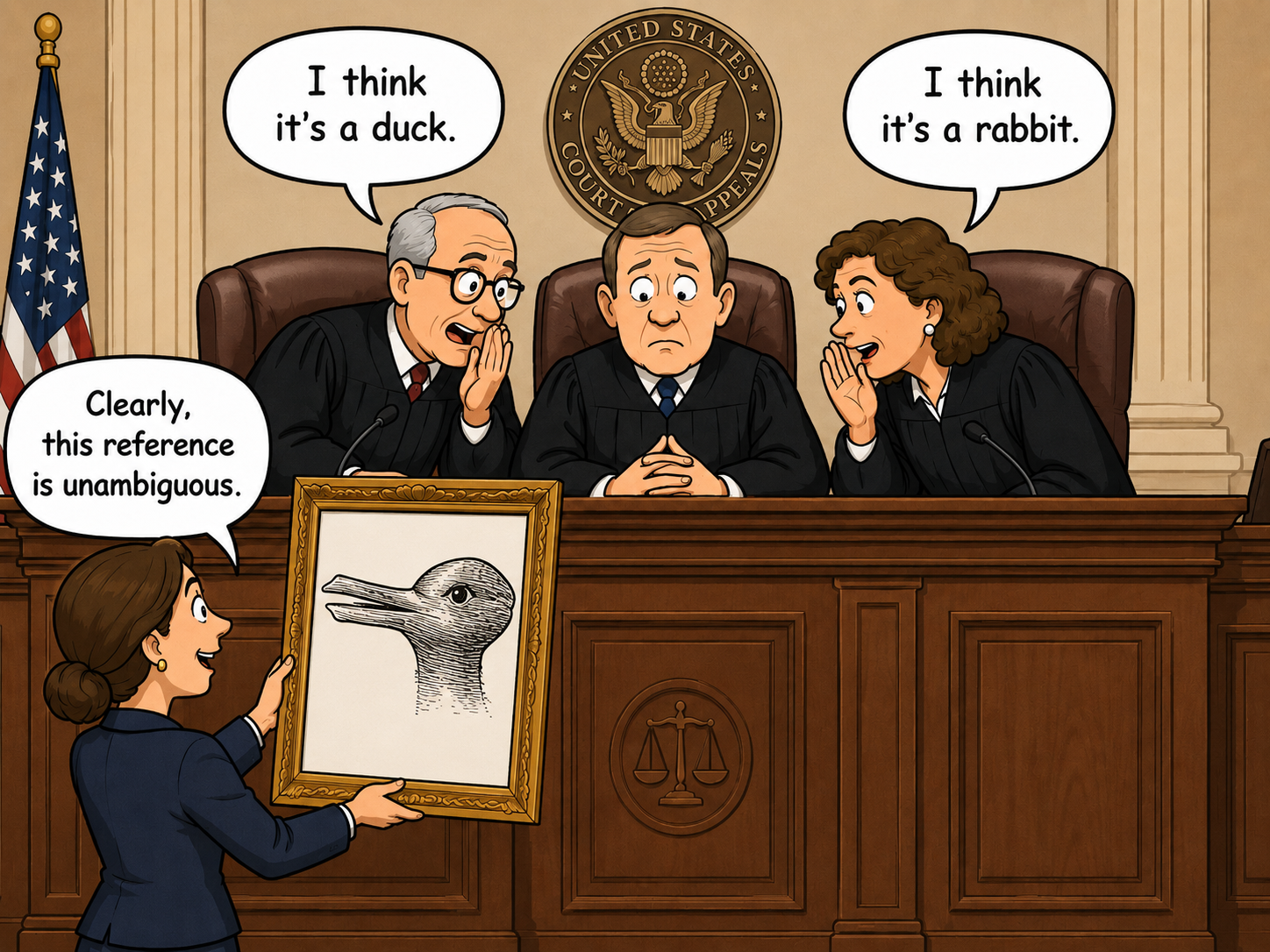
Anticipation requires that a single reference “describe the claimed invention with sufficient precision and detail to establish that the subject matter existed in the prior art.” Verve, LLC v. Crane Cams, Inc., 311 F.3d 1116, 1120 (Fed. Cir. 2002) (emphasis added). For this reason, it has long been understood that ambiguous references do not, as a matter of law, anticipate a claim. See, e.g., W.L. Gore & Assocs., Inc. v. Garlock, Inc., 721 F.2d 1540, 1554 (Fed. Cir. 1983) (refusing to find claims anticipated when the prior art references were “unacceptably vague”); see also In re Hughes, 52 CCPA 1355, 345 F.2d 184, 188 (1965); In re Turlay, 49 CCPA 1288, 304 F.2d 893, 899 (1962) (“It is well established that an anticipation rejection cannot be predicated on an ambiguous reference.”).
Wasica Finance GmbH v. Continental Auto. Systems, 853 F. 3d 1272, 1284 (Fed. Cir. 2017).