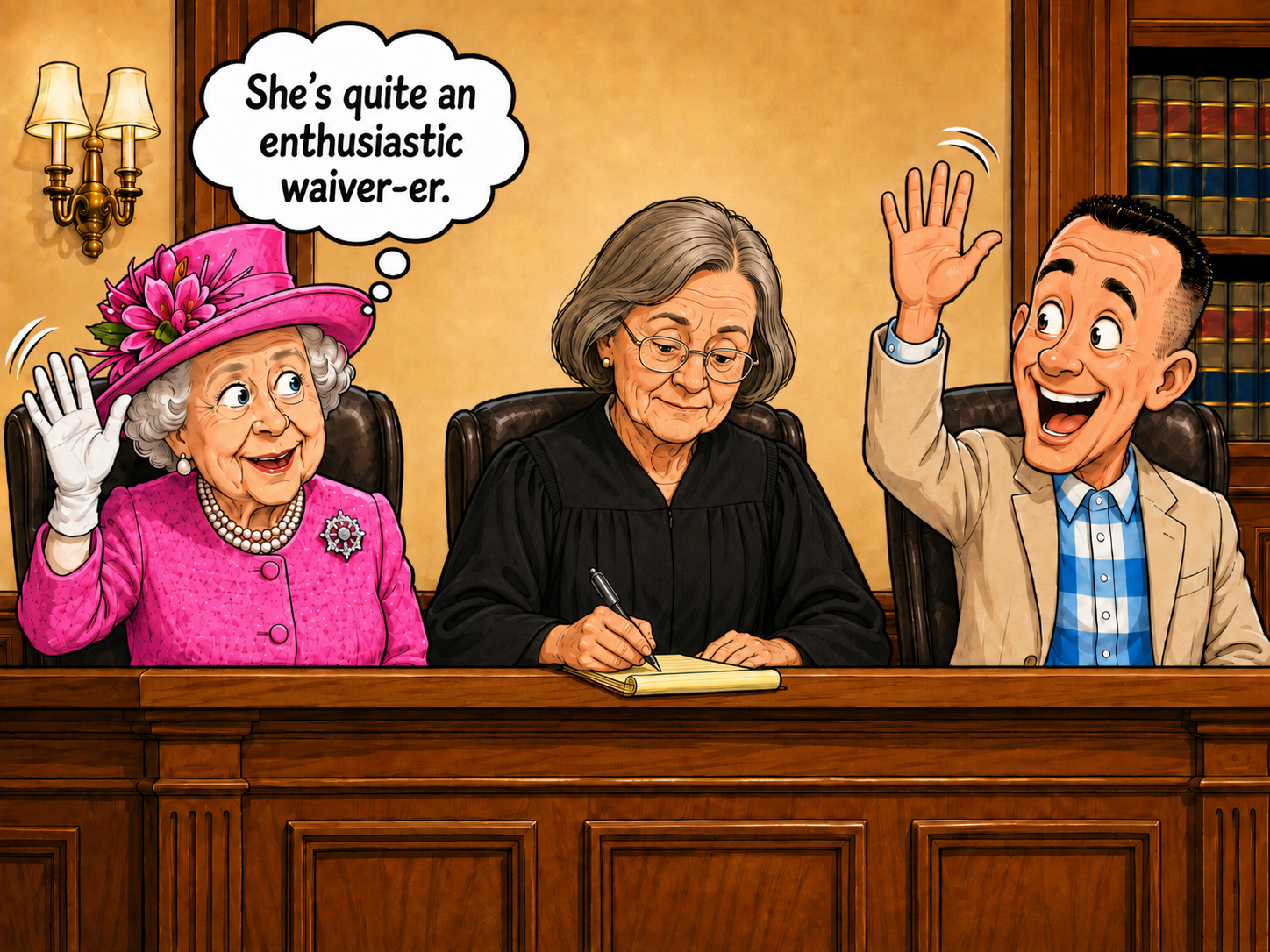
Chief Judge Michel (ret.) once commented that waiver is not an absolute rule and lots of times the court allows people to make new arguments on appeal:
An interesting article might research when Federal Circuit judges have ignored waiver and when they have enforced it. The research might include which judges are most likely to apply waiver. Query: if all litigants are to be treated equally, what factors does the court apply when determining whether to enforce waiver? Is there such a thing as a “more important” case or a “more important” litigant?
The Forshey v. Principi, 284 F. 3d 1335 (Fed. Cir. 2002)(en banc) and Golden Bridge Technology, Inc. v. Nokia, Inc., 527 F. 3d 1318 (Fed. Cir. 2008) cases give some guidance. However, how has the Federal Circuit treated the situation noted in those cases that states: “(3) ‘appellate courts may apply the correct law even if the parties did not argue it below and the court below did not decide it, but only if an issue is properly before the court . . . .’ “?