Archive for June, 2026
Cartoon of the day
Monday, June 29th, 2026Quote for the day
Sunday, June 28th, 2026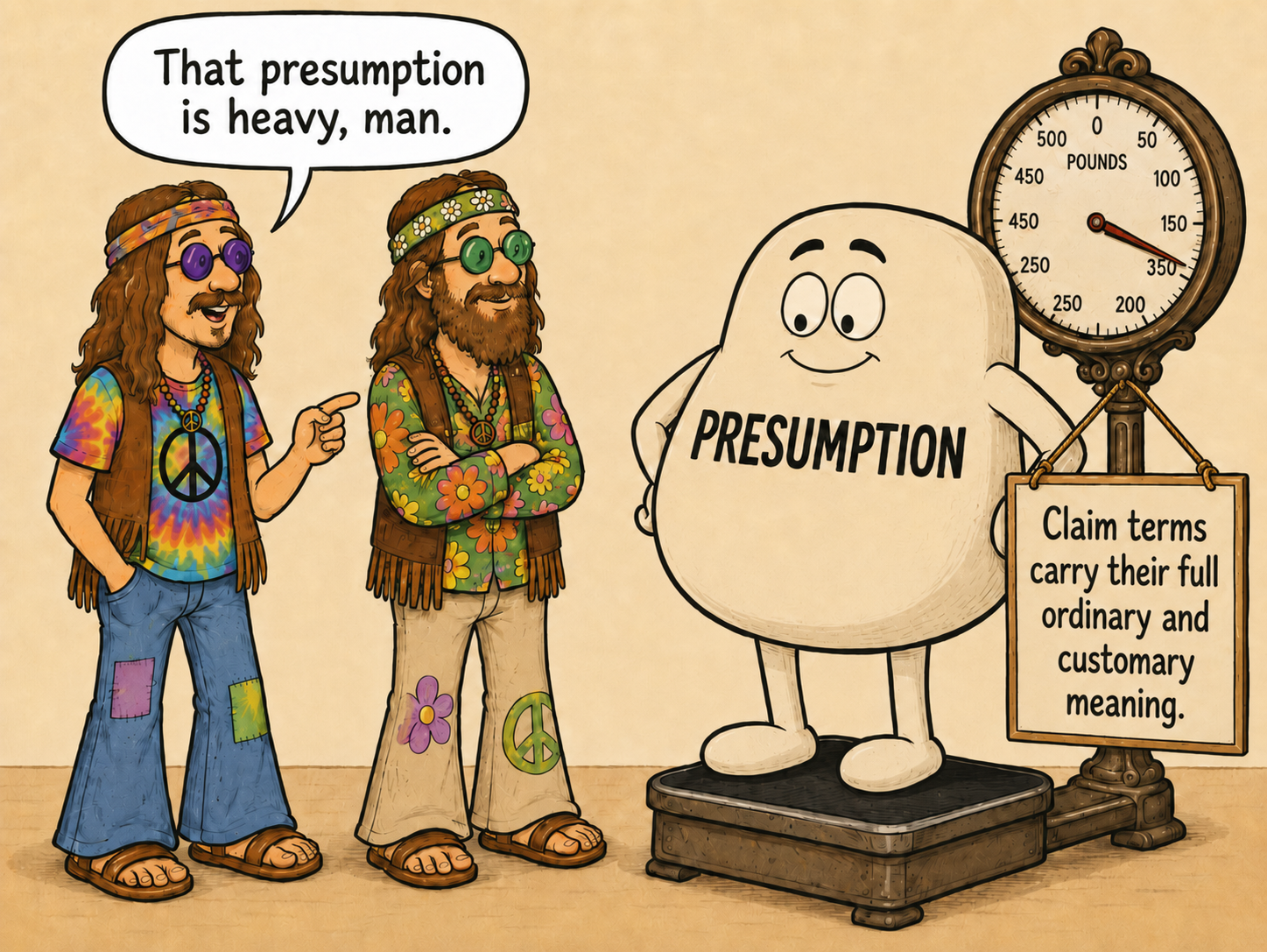
Claim terms are generally given their plain and ordinary meanings as understood by a skilled artisan, when read in the context of the specification and prosecution history. See Phillips v. AWH Corp., 415 F.3d 1303, 1313 (Fed. Cir. 2005) (en banc). In particular, claim scope can be narrowed “when the patentee disavows the full scope of a claim term either in the specification or during prosecution.” Thorner v. Sony Comput. Ent. Am. LLC, 669 F.3d 1362, 1365 (Fed. Cir. 2012). This disavowal must be “clear and unmistakable” so as to overcome the “heavy presumption” that claim terms carry their full ordinary and customary meaning. Plantronics, Inc. v. Aliph, Inc., 724 F.3d 1343, 1350 (Fed. Cir. 2013) (citation omitted).
FOCUS PRODUCTS GROUP INT’L v. Kartri Sales Co., 156 F. 4th 1259, 1273 (Fed. Cir. 2025)
Earthquake prediction
Sunday, June 28th, 2026This past week, Google was able to save countless lives in Venezuela with its earthquake detection system that displayed warnings to Venezuelans using its Android Earthquake alert system. [Link]. That reminded me of this earlier post: [Judge Chen asks: Would a method of predicting earthquakes be patent eligible?], which I will repeat below.
—————————————————————–
Judge Chen asks: Would a method of predicting earthquakes be patent eligible?
In a recent oral argument, Judge Chen noted the confusion caused by the Federal Circuit’s §101 case law. He posited a hypothetical as to whether an earthquake prediction system should be patent eligible? You can listen to his hypothetical here:
Judge Moore chimed in that she hopes a case like that will make its way to the Supreme Court, as the Court might actually find something patent eligible and there would be a bookend.
I will add this sound bite to the audio key page for Judge Chen.
Quote for the day
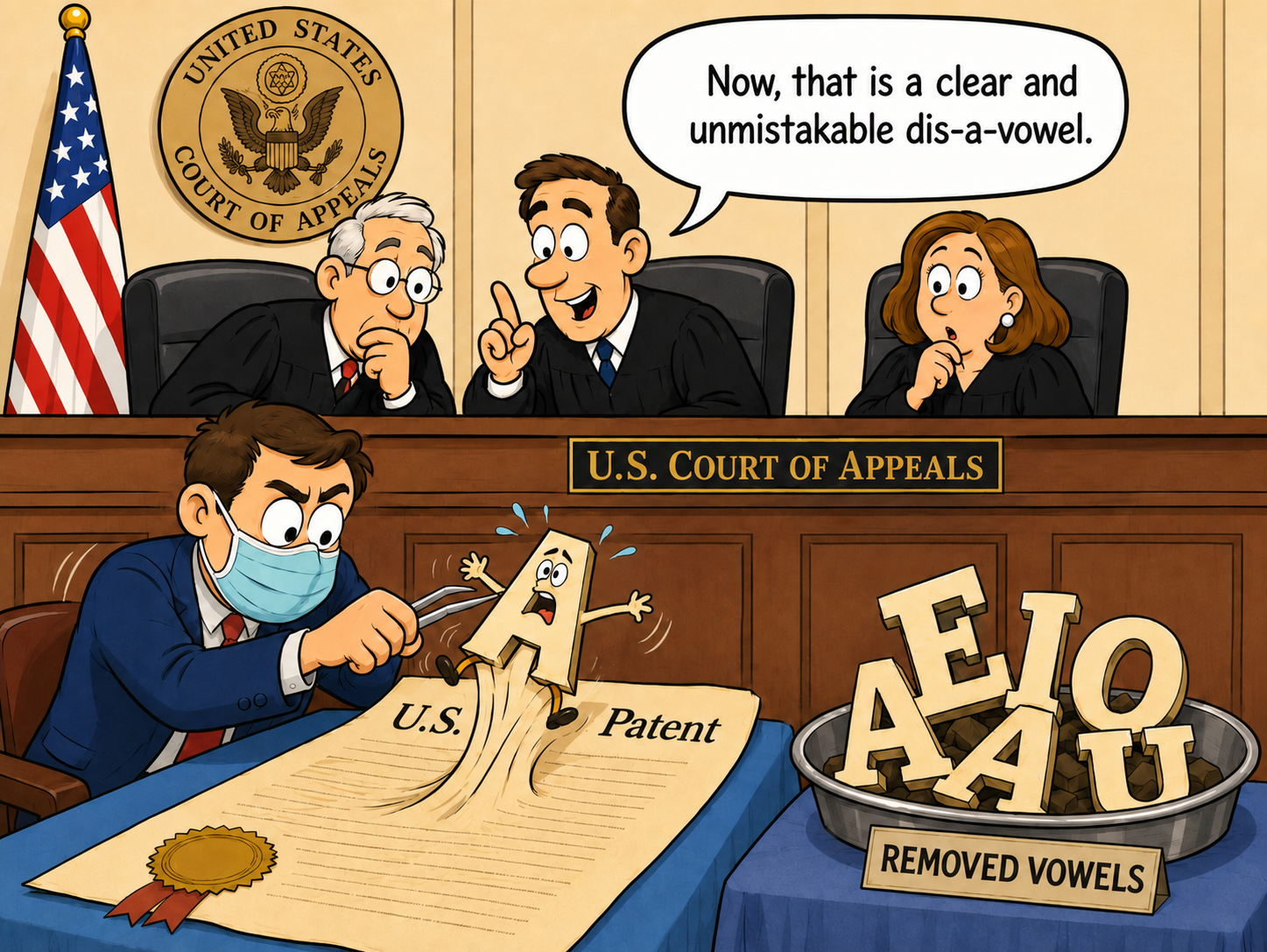
Saturday, June 27th, 2026In Spine Solutions, Inc. v. Medtronic Sofamor Danek USA, Inc., we explained that even where a particular structure makes it “particularly difficult” to obtain certain benefits of the claimed invention, this does not rise to the level of disavowal of the structure. 620 F.3d 1305, 1315 (Fed.Cir.2010). It is likewise not enough that the only embodiments, or all of the embodiments, contain a particular limitation. We do not read limitations from the specification into claims; we do not redefine words. Only the patentee can do that. To constitute disclaimer, there 1367*1367 must be a clear and unmistakable disclaimer.
Thorner v. Sony Computer Entertainment America LLC, 669 F. 3d 1362, 1366-67 (Fed. Cir. 2012).
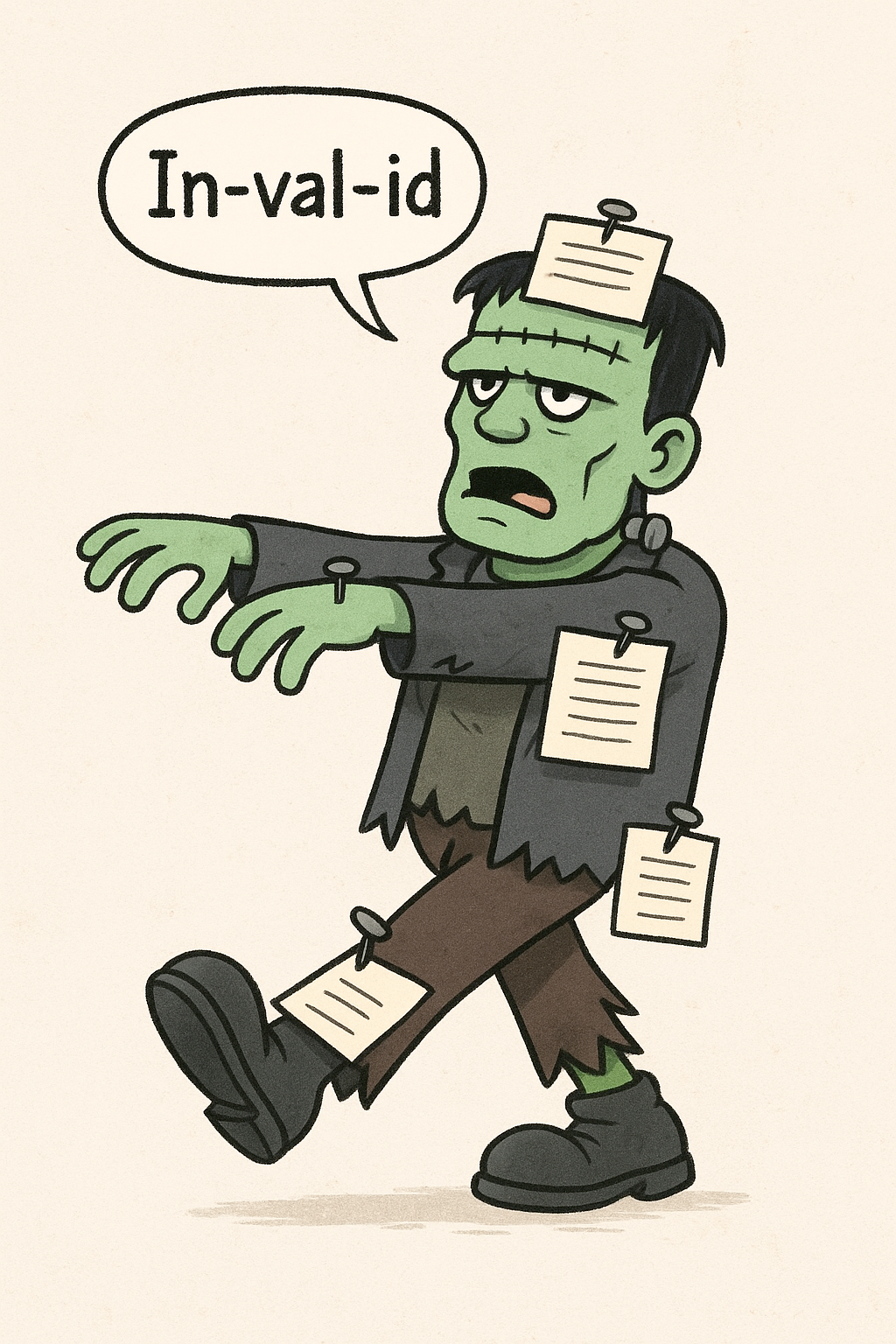
Cartoon of the Day
Wednesday, June 24th, 2026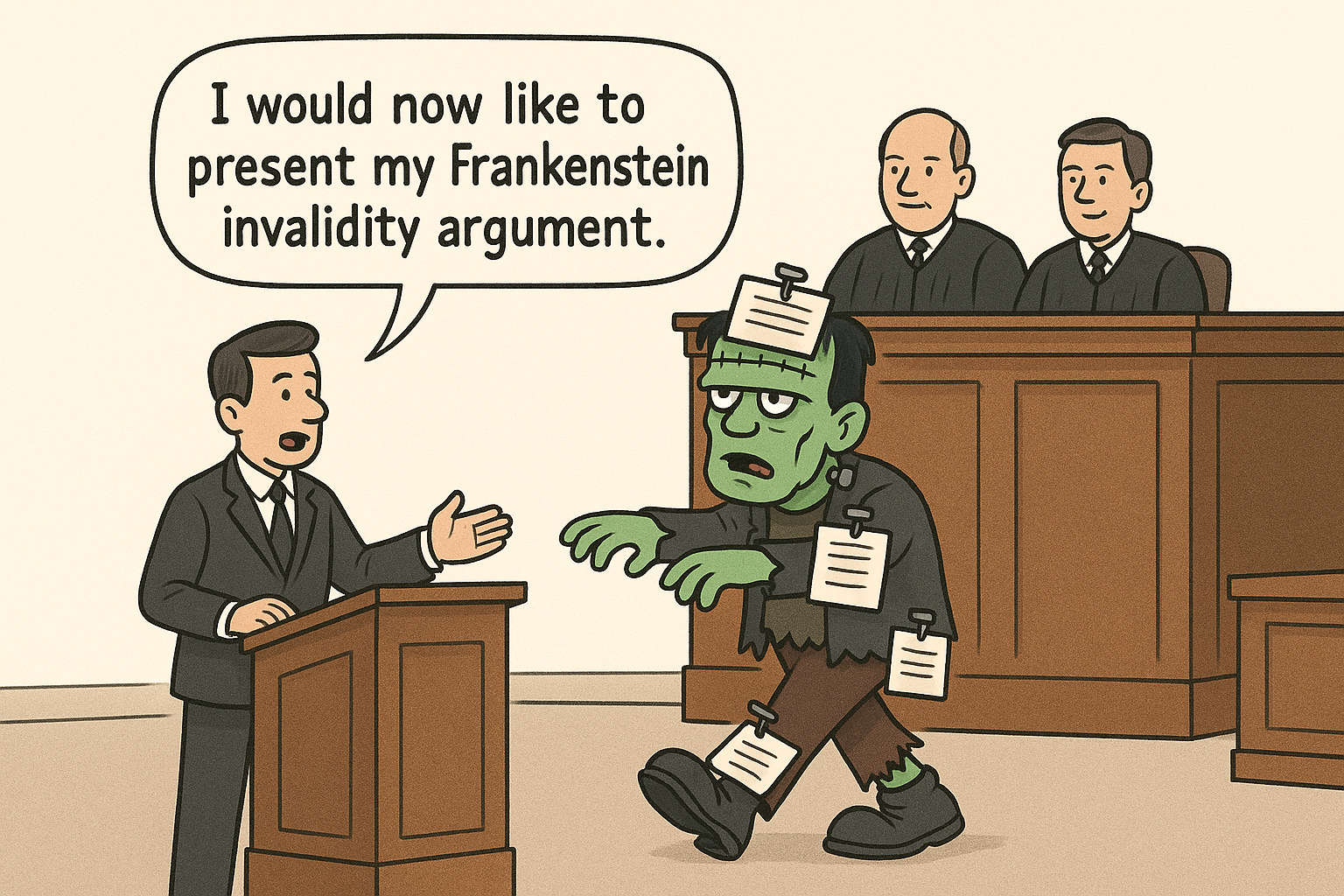
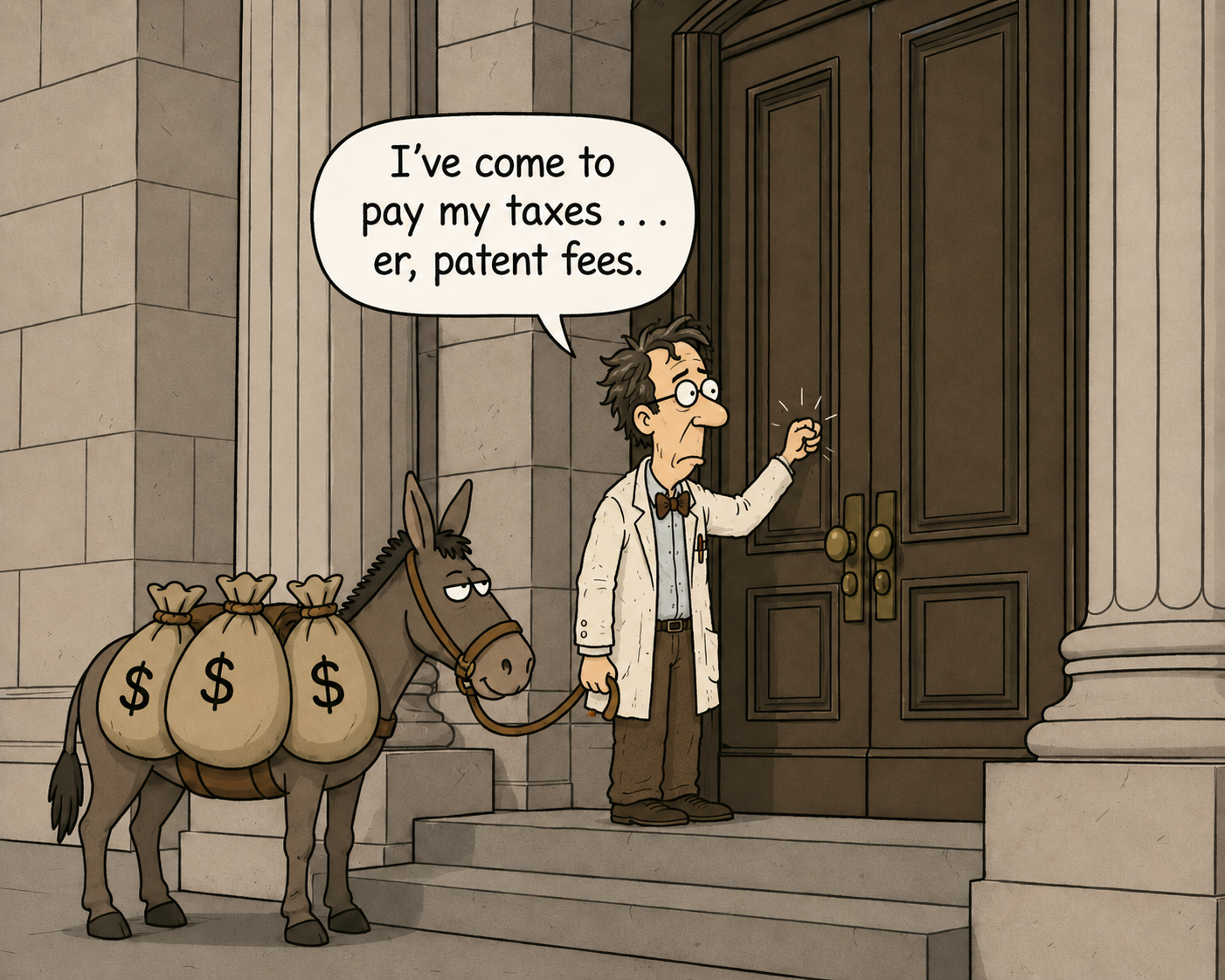
Article suggestion: Do patent fees ever rise to the level of a tax?
Monday, June 8th, 2026After browsing the decision today in State of California v. Mullin that has initially struck down the $100,000 fee for H-1B visas, my mind turned to patent fees. It might be an interesting article for someone to analyze when fees imposed by an Executive Branch agency such as the Patent Office rise to the level of a tax. Two recent fee changes would be good vehicles for analysis — namely, (1) the recent fee change that increased fees for some continuation applications, and (2) the recent fee change that imposed fees for citing a large number of references. I think that would make an interesting article.