Archive for July, 2026

New arguments on appeal that rely on the specification

Thursday, July 23rd, 2026

Further to this previous article suggestion about waiver, I found these quotes from Federal Circuit case law to be interesting. Some of the cases concern the Federal Circuit noting that the specification is often intrinsic evidence in patent cases and how that affects the waiver determination.

We reject Magseis’ contention that Seabed waived certain arguments concerning the prosecution history by failing to raise them below. The doctrine of waiver does not preclude a party from supporting its original claim construction with new citations to intrinsic evidence of record. See Interactive Gift Express, Inc. v. Compuserve Inc., 256 F.3d 1323, 1346 (Fed. Cir. 2001). Seabed’s arguments on appeal 1290*1290 do not change the scope of the construction it advanced below, i.e., that “internally fixed within” does not exclude gimbaled geophones. J.A. 446-51. And Magseis does not claim that Seabed’s arguments rely on intrinsic evidence that was not in the record below. Accordingly, we see no waiver.

Seabed Geosolutions (US) Inc. v. MAGSEIS FF LLC, 8 F. 4th 1285, 1289-90 (Fed. Cir. 2021)(Chief Judge Moore writing for the court).

The concerns expressed above in Finnigan and Sage would certainly preclude a party from changing its claim construction, that is, the scope of its claim construction, on appeal. However, those concerns would not necessarily preclude a party from proffering additional or new supporting arguments, based on evidence of record, for its claim construction. As Finnigan indicates, the concerns in waiver relate to issues such as: (1) whether the claim construction and arguments on appeal are consistent with those tendered at trial; (2) whether there is a clear presentation of the issue to be resolved; (3) whether there was an adequate opportunity for response and evidentiary development by the opposing party at trial; and (4) whether there is a record reviewable by the appellate court that is properly crystallized around and responsive to the asserted argument. It is evident that a party’s proffer of additional support from a specification, for an existing claim construction, will not violate these concerns. This follows from the fact that the parties and the district court are assumed to be familiar with the specification because it is admitted into evidence in its entirety and is vital to the process of construing the claims, as described earlier. Thus, the emphasis of different aspects of the specification will not detract from the clarity of the claim construction issue on appeal, nor necessitate additional discovery or testimony. Accordingly, we hold that arguments that are based on a specification in evidence and that are in support of an existing claim construction are not barred by the doctrine of waiver for the sole reason that they were not first presented to the trial court.

Interactive Gift Exp., Inc. v. Compuserve Inc., 256 F. 3d 1323, 1347 (Fed. Cir. 2001)(emphasis added).

We have held that “arguments that are based on a specification in evidence and that are in support of an existing claim construction are not barred by the doctrine of waiver for the sole reason that they were not first presented to the trial court.” Interactive Gift Express, Inc. v. Compuserve Inc., 256 F.3d 1323, 1347 (Fed. Cir. 2001); see also Seabed Geosolutions (US) Inc. v. Magseis FF LLC, 8 F.4th 1285, 1289 (Fed. Cir. 2021) (“The doctrine of waiver does not preclude a party from supporting its original claim construction with new citations to intrinsic evidence of record.”). Medytox acknowledges that the Board did not, in the first instance, address the intrinsic record in its claim construction analysis of the responder rate limitation. Appellant’s Br. 34 n.9. We note, however, that even if we agreed to analyze the intrinsic record for the first time on appeal, it would not change our holding on claim construction because the parties’ constructions do not substantively differ. We, therefore, decline to decide the forfeiture issue.

Medytox, Inc. v. GALDERMA SA, 71 F. 4th 990 (Fed. Cir. 2023)

[3] Globus asks us to ignore Life Spine’s Figure 40 arguments because they were supposedly not made to the Board. As Life Spine correctly observes, however, “[t]he doctrine of waiver does not preclude a party from supporting its original claim construction with new citations to intrinsic evidence of record.” Seabed Geosolutions (US) Inc. v. Magseis FF LLC, 8 F.4th 1285, 1289 (Fed. Cir. 2021); see also Medytox, Inc. v. Galderma S.A., 71 F.4th 990, 997 (Fed. Cir. 2023) (“We have held that arguments that are based on a specification in evidence and that are in support of an existing claim construction are not barred by the doctrine of waiver for the sole reason that they were not first presented to the trial court.”) (internal quotation marks omitted).

LIFE SPINE, INC. v. GLOBUS MEDICAL, INC., Appeal No. 2024-2167) (Fed. Cir. June 4, 2026)(footnote 3).
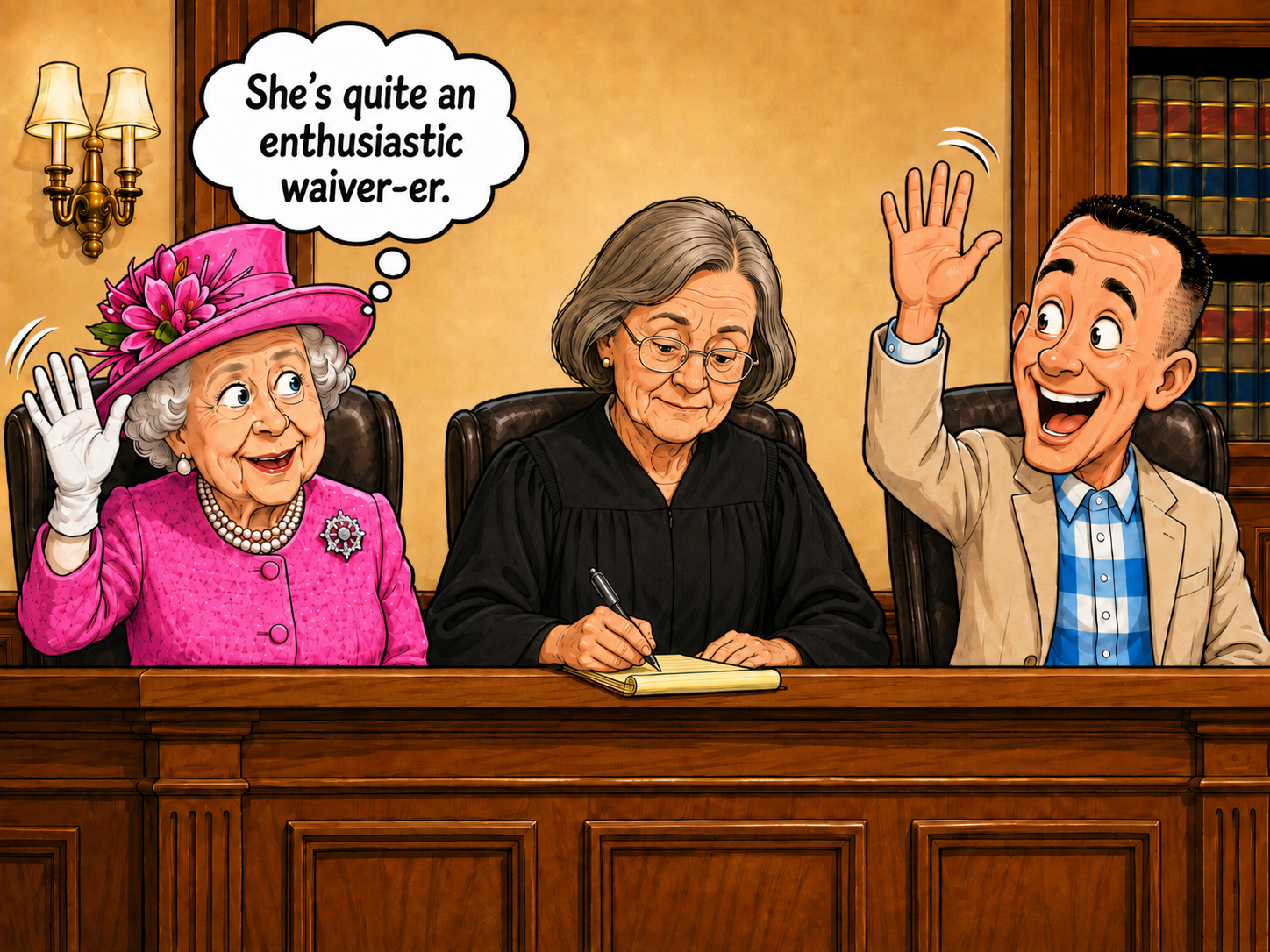

Article Suggestion: Which judges are the biggest waiver-ers?

Wednesday, July 22nd, 2026

Chief Judge Michel (ret.) once commented that waiver is not an absolute rule and lots of times the court allows people to make new arguments on appeal:

An interesting article might research when Federal Circuit judges have ignored waiver and when they have enforced it. The research might include which judges are most likely to apply waiver. Query: if all litigants are to be treated equally, what factors does the court apply when determining whether to enforce waiver? Is there such a thing as a “more important” case or a “more important” litigant?

The Forshey v. Principi, 284 F. 3d 1335 (Fed. Cir. 2002)(en banc) and Golden Bridge Technology, Inc. v. Nokia, Inc., 527 F. 3d 1318 (Fed. Cir. 2008) cases give some guidance. However, how has the Federal Circuit treated the situation noted in those cases that states: “(3) ‘appellate courts may apply the correct law even if the parties did not argue it below and the court below did not decide it, but only if an issue is properly before the court . . . .’ “?

Quote of the day

Wednesday, July 15th, 2026

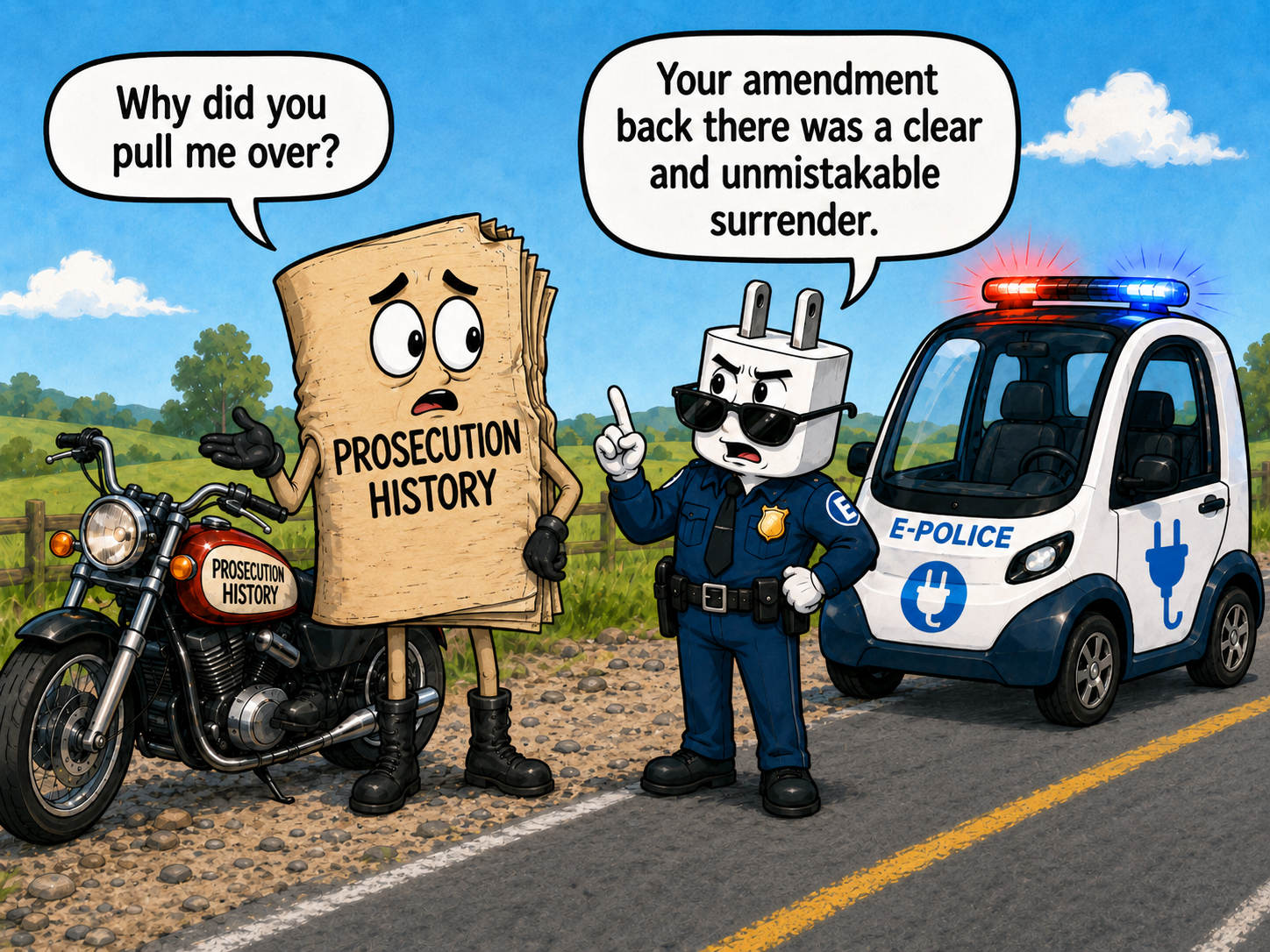
To invoke argument-based estoppel, the prosecution history must evince a “clear and unmistakable surrender of subject matter.”

Pharmacia & Upjohn Co. v. Mylan Pharm., Inc., 170 F.3d 1373, 1377 (Fed.Cir.1999).

A brief recess

Saturday, July 11th, 2026

In an unusual turn of events, the Federal Circuit will not be sitting for oral arguments this August. I imagine there will be lots of work being done at the court — just no oral arguments. I don’t remember a year when the court did not sit in August — so, this might be a first. The schedule for 2027 shows the court will hold oral arguments in August 2027.

Quote for the day

Wednesday, July 8th, 2026

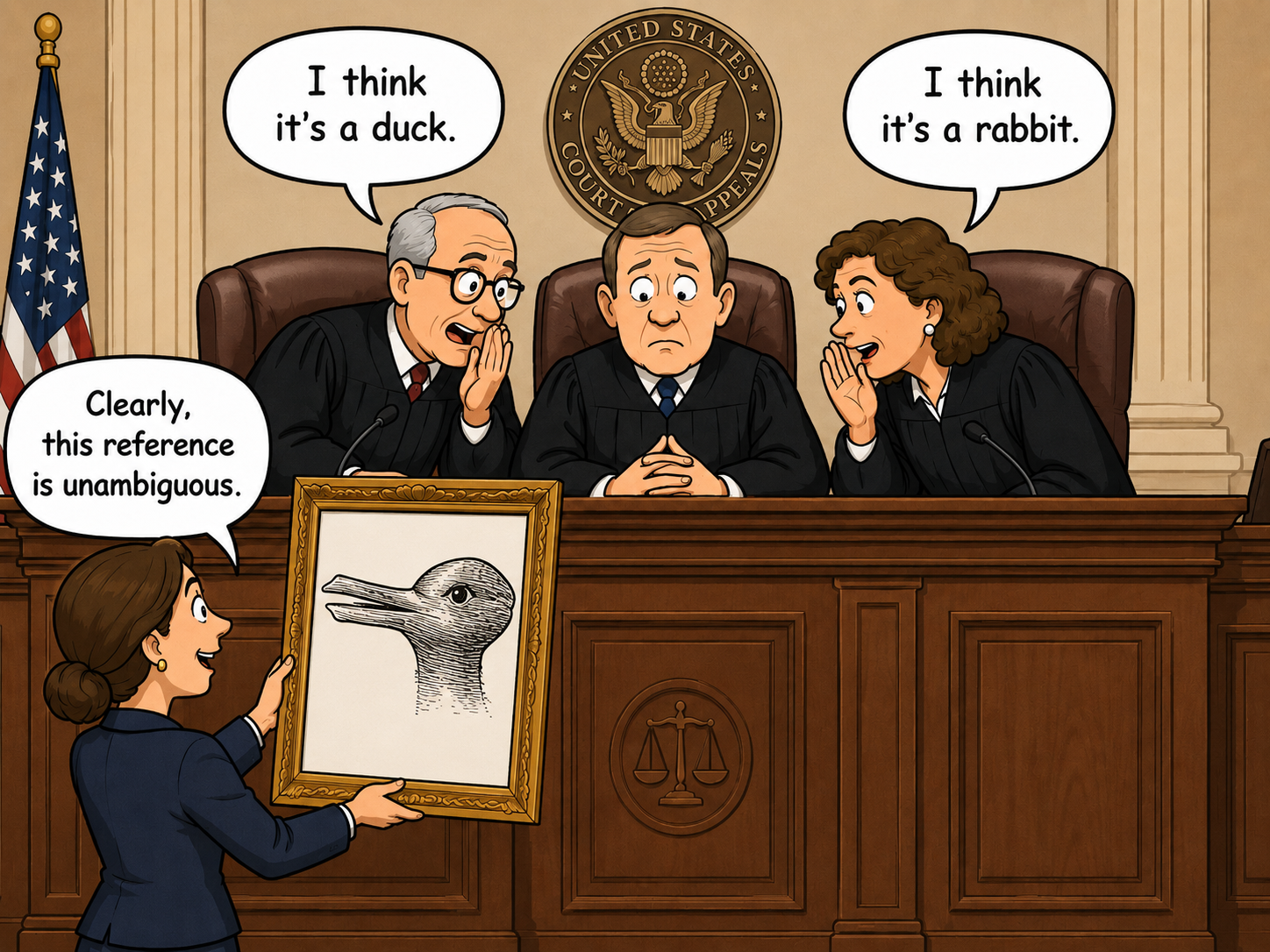
Anticipation requires that a single reference “describe the claimed invention with sufficient precision and detail to establish that the subject matter existed in the prior art.” Verve, LLC v. Crane Cams, Inc., 311 F.3d 1116, 1120 (Fed. Cir. 2002) (emphasis added). For this reason, it has long been understood that ambiguous references do not, as a matter of law, anticipate a claim. See, e.g., W.L. Gore & Assocs., Inc. v. Garlock, Inc., 721 F.2d 1540, 1554 (Fed. Cir. 1983) (refusing to find claims anticipated when the prior art references were “unacceptably vague”); see also In re Hughes, 52 CCPA 1355, 345 F.2d 184, 188 (1965); In re Turlay, 49 CCPA 1288, 304 F.2d 893, 899 (1962) (“It is well established that an anticipation rejection cannot be predicated on an ambiguous reference.”).

Wasica Finance GmbH v. Continental Auto. Systems, 853 F. 3d 1272, 1284 (Fed. Cir. 2017).

Quote for the day

Monday, July 6th, 2026

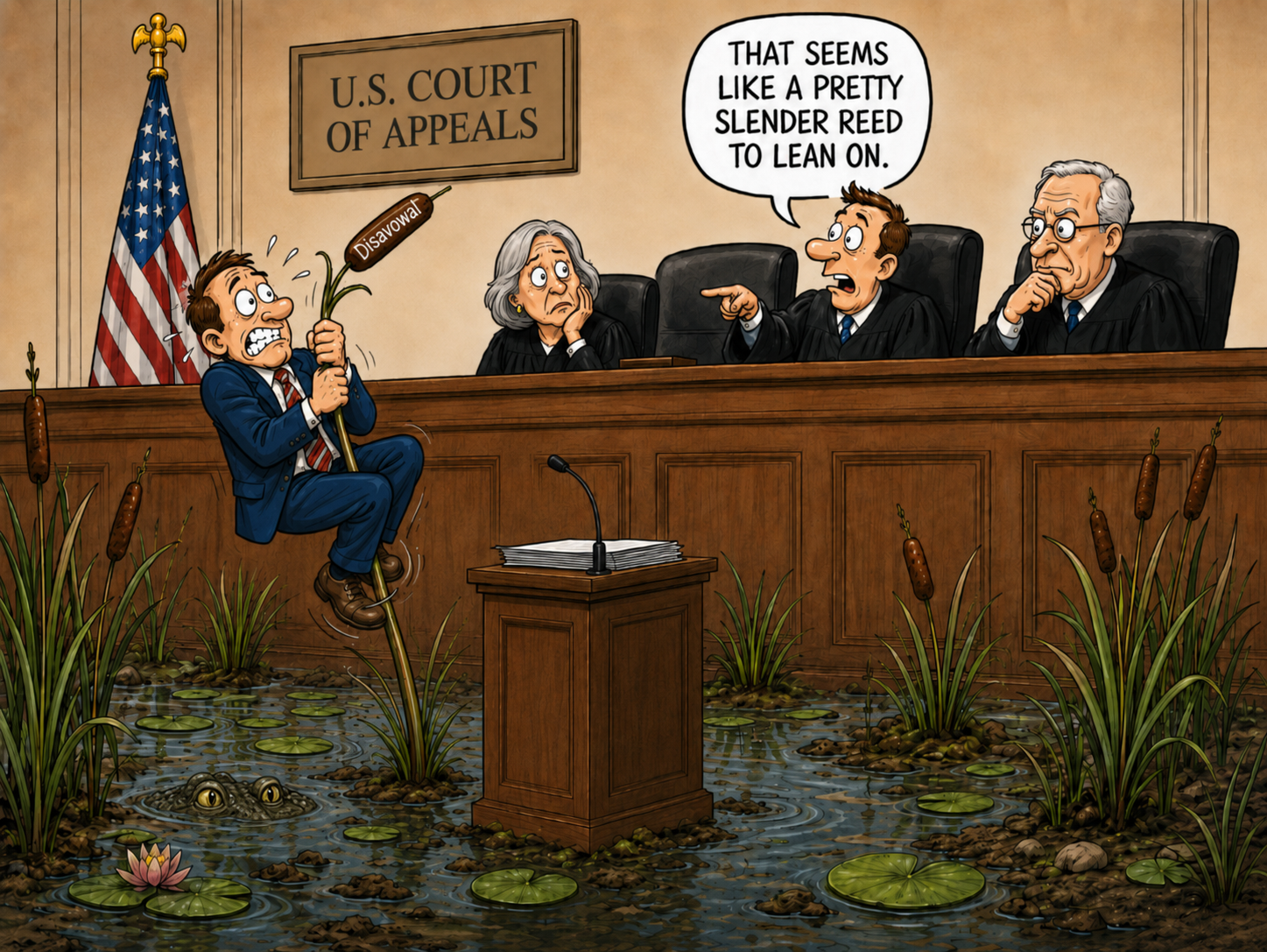
We have, however, declined to apply the doctrine of prosecution disclaimer where the alleged disavowal of claim scope is ambiguous. For instance, in Northern Telecom Ltd. v. Samsung Electronics Company, 215 F.3d 1281, 1293-95, 55 USPQ2d 1065, 1074-75 (Fed.Cir.2000), the accused infringer relied on remarks made by the inventors to overcome a rejection as the basis for narrowing the broad language of the claims. Having independently considered the prosecution history, we viewed the inventors’ statements as amenable to multiple reasonable interpretations and deemed the remarks so ambiguous that, “[l]ike the district court, we simply cannot tell.” Id. at 1294, 215 F.3d 1281, 55 USPQ2d at 1075. Since the prosecution statements were “far too slender a reed to support the judicial narrowing of a clear claim term,” we declined to apply the doctrine of prosecution disclaimer under those circumstances. Id.; see also Rexnord Corp. v. Laitram Corp., 274 F.3d 1336, 1347, 60 USPQ2d 1851, 1858 (Fed.Cir.2001) (refusing to limit the ordinary meaning of the claim because the alleged disclaimer in the file wrapper was at best “inconclusive”); Pall Corp. v. PTI Techs. Inc., 259 F.3d 1383, 1393-94, 59 USPQ2d 1763, 1770 (Fed.Cir.2001) (finding that the scope of disclaimer over the prior art reference was ambiguous and thus remanding for clarification), vacated on other grounds, 535 U.S. 1109, 122 S.Ct. 2324, 153 L.Ed.2d 152 (2002); DeMarini Sports, Inc. v. Worth, Inc., 239 F.3d 1314, 1326-27, 57 USPQ2d 1889, 1895-96 (Fed. Cir.2001) (refusing to rely on ambiguity surrounding examiner’s silence or patentee’s lack of argument during prosecution to construe claim term); Vanguard Prods. Corp. v. Parker Hannifin Corp., 234 F.3d 1370, 1372, 57 USPQ2d 1087, 1089 (Fed. Cir.2000) (refusing to narrow the asserted claim based on prosecution disclaimer because “the prosecution history does not support [the infringer]’s argument that the Vanguard inventors `expressly disclaimed’ claim scope beyond products made by co-extrusion”); Serrano v. Telular Corp., 111 F.3d 1578, 1584, 42 USPQ2d 1538, 1542-43 (Fed.Cir.1997); cf. Spectrum Int’l, Inc. v. Sterilite Corp., 164 F.3d 1372, 1378, 49 USPQ2d 1065, 1068-69 (Fed.Cir.1998) (noting that “explicit statements made by a patent applicant during prosecution to distinguish a claimed invention over prior art may serve to narrow the scope of a claim”).

Omega Engineering, Inc v. Raytek Corp., 334 F. 3d 1314, 1324 (Fed. Cir. 2003)

The §101 Train Wreck

Friday, July 3rd, 2026

Cartoons of the day

Thursday, July 2nd, 2026